New research highlights the critical role of digital kerbside infrastructure in the future of urban logistics.
Grid Smarter Cities Founder Neil Herron has contributed to new research from Durham University, alongside fellow authors Nihal Berktas, Riccardo Mogre, and Li Ding, exploring how digital kerbside systems can dynamically respond to real-world operational challenges in urban freight. The paper, Real-Time Optimisation for Rescheduling Bookable Kerbside Delivery Bays under Vehicle Delays, examines how optimisation and decision-support technologies can improve the management of bookable loading bays when vehicles arrive later than planned.
The research brings together academic expertise from Durham University and practical operational experience from the front line of kerbside management. As a co-author, Neil contributed industry knowledge gained through the development and deployment of Grid Smarter Cities’ Kerb® platform and the delivery of some of the UK’s first bookable loading bay schemes.
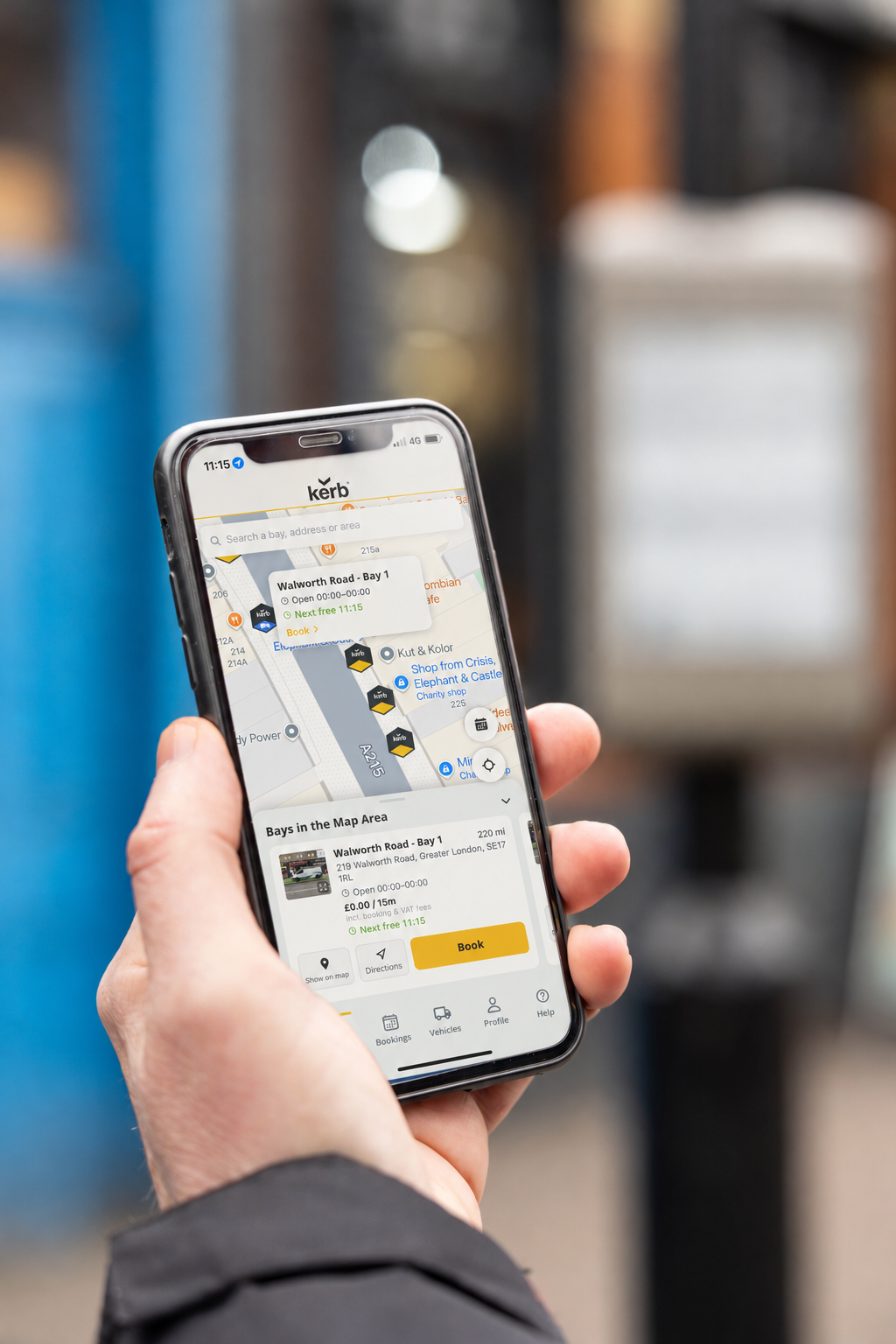
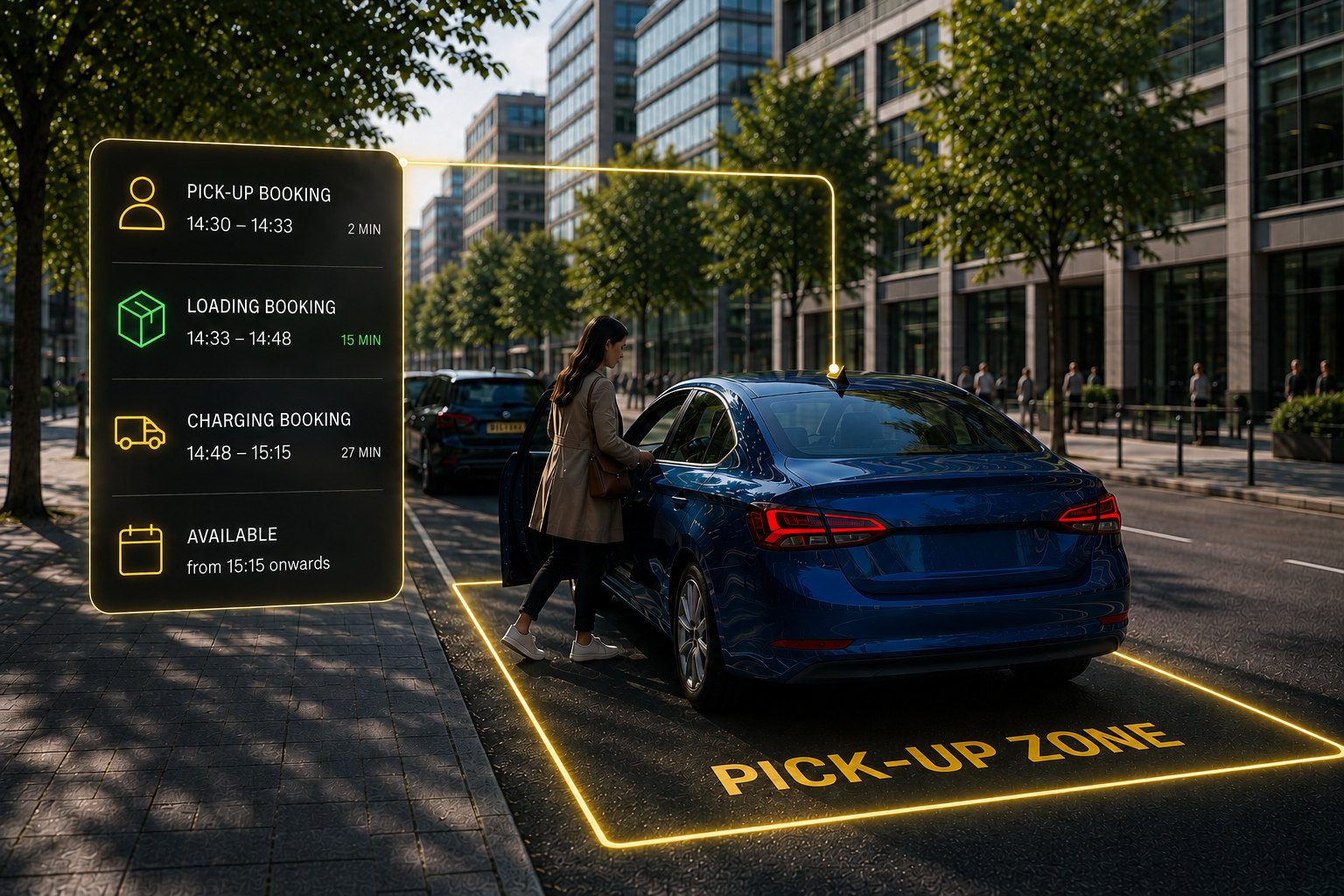
Drawing on operational data from the Walworth Road bookable loading bay scheme in partnership with Southwark Council, the study explores how digital systems can intelligently adapt when delivery vehicles encounter delays. Rather than allowing conflicts and inefficiencies to build throughout the day, the research demonstrates how real-time optimisation can revise bookings, reallocate kerbside capacity and minimise disruption for operators and local authorities alike.
“Southwark is proud to be leading the way with innovative approaches to how we use our streets, and the introduction of bookable loading bays on Walworth Road is a clear example of that ambition in action. By allowing delivery drivers to book a space in advance, we’re reducing unnecessary vehicle movements, cutting congestion and improving local air quality while making better use of limited road space.
Smarter management of kerbside space is essential to delivering our Streets for People vision, helping us balance the needs of residents and businesses while supporting healthier, lower-carbon travel. We’re delighted that our partnership with Grid Smarter Cities has contributed to research that will help shape the future of digital kerbside management.” – Councillor James McAsh, Leader of Southwark Council
Read Councillor James McAsh’s full statement below.
For Neil, the work represents an important step in the evolution of kerbside management.
“For decades, the kerbside has been managed as a static piece of infrastructure. Yet the demands being placed on it are becoming increasingly dynamic. This research helps demonstrate how digital systems can support more responsive, efficient and intelligent management of limited kerbside space.” – Neil Herron, Founder of Grid Smarter Cities.
From Freight Management to Autonomous Mobility
While the paper focuses on freight deliveries, its implications extend far beyond today’s logistics operations.
Neil has long argued that the success of autonomous vehicles will depend not simply on navigation technology, but on the ability of vehicles to understand where they can legally and safely stop. Future fleets of robotaxis, autonomous delivery vehicles and connected transport services will require access to digital kerbside infrastructure capable of allocating, modifying and communicating stopping permissions in real time.
The challenges explored in the Durham University research mirror many of the operational scenarios autonomous vehicles will face. When a delivery vehicle is delayed, a system must decide how best to reallocate limited kerbside capacity. In the future, the same type of decision-making will be required when autonomous vehicles encounter congestion, unexpected demand or changing operational priorities.
The study therefore reinforces the growing need for what Neil describes as the “missing layer” in autonomous mobility: machine-readable kerbside permissions and real-time kerbside orchestration.
Bridging Research and Real-World Delivery
One of the most valuable aspects of the project is the combination of academic rigour and operational reality.
The research was informed by data and experience from a live deployment rather than a purely theoretical model. Using booking data from Grid’s Walworth Road bookable loading bay scheme in Southwark, researchers evaluated thousands of operational scenarios and demonstrated that real-time optimisation can significantly reduce disruption compared with traditional approaches.
This reflects a core principle that has guided Neil’s work throughout his career: innovation must be grounded in practical implementation and measurable outcomes.
Looking Ahead
As cities continue to explore connected, automated and data-driven transport systems, the importance of the kerbside will only increase.
Research such as this helps establish the evidence base for a future in which access to urban space can be managed dynamically, fairly and efficiently. For Neil and the wider industry, it is another step towards a transport system where digital infrastructure enables safer, cleaner and more productive cities.
The future of mobility will be orchestrated, not improvised.
The future of mobility is not just about autonomous vehicles. It is about creating the digital infrastructure that allows them to operate effectively within the complex reality of our cities.
To discuss the research, explore opportunities for collaboration, or learn more about digital kerbside infrastructure and autonomous mobility, contact Neil Herron and the team at Grid Smarter Cities.
Statement from Councillor James McAsh, Leader of Southwark Council:
“Southwark is proud to be leading the way with innovative approaches to how we use our streets, and the introduction of bookable loading bays on Walworth Road is a clear example of that ambition in action. These bays are about making it easier for businesses to access parking when they need it, while ensuring we make the most efficient use of limited road space on one of London’s busiest high streets.
“By allowing delivery drivers to book a space in advance, we are reducing the need for delivery drivers having to drive around searching for parking, cutting congestion and improving local air quality. It’s a practical, forward-thinking solution that supports our Streets for People strategy, which is about creating a cleaner, greener Southwark, where it’s safer and there are more accessible streets for everyone.
“Smarter management of kerbside space is essential to delivering that vision, helping us balance the needs of residents and businesses while prioritising healthier, low-carbon travel.
“After a week of record-breaking temperatures, it’s especially important to highlight initiatives like this that show how local government can take tangible steps to reduce emissions while still supporting thriving communities and local economies. Tackling the climate emergency means rethinking how we use space in our borough, and schemes like this are a key part of that shift.
“We were recently pleased to welcome colleagues from the New York City Department of Transportation to Walworth Road to see firsthand some of our highways interventions. It was a valuable opportunity to share ideas and learn from one another, as cities around the world face the same challenge of managing limited street space while reducing emissions and supporting vibrant local economies.
“There is a growing global recognition that innovation at street level – from parking to freight and active travel – is essential if we are to meet our climate targets. Southwark is proud to be at the forefront of this work here in London.
“The Walworth Road bookable loading bays demonstrate how we can combine technology, environmental responsibility and practical solutions for residents and businesses. We will continue to explore bold ideas like this as part of our Streets for People work to ensure Southwark remains a cleaner, greener and more accessible borough for everyone.”
About Grid Smarter Cities:
We specialise in building sustainable digital products that enable the smarter management of kerbside and freight logistics. Our knowledge of the ecosystem at the kerbside enables us to work with clients such as local authorities and operators to solve their challenges and with a tech solution at the kerbside.