By Neil Herron, Founder, Grid Smarter Cities
The autonomous vehicle revolution is no longer theoretical. Robotaxis are already operating commercially in major US cities. Automated freight vehicles are being trialled across ports, logistics hubs and industrial estates. Governments worldwide are introducing legislation to enable self-driving vehicles onto public roads.
But beneath the excitement surrounding AI, sensors and driverless technology sits a less glamorous — yet far more critical — question:
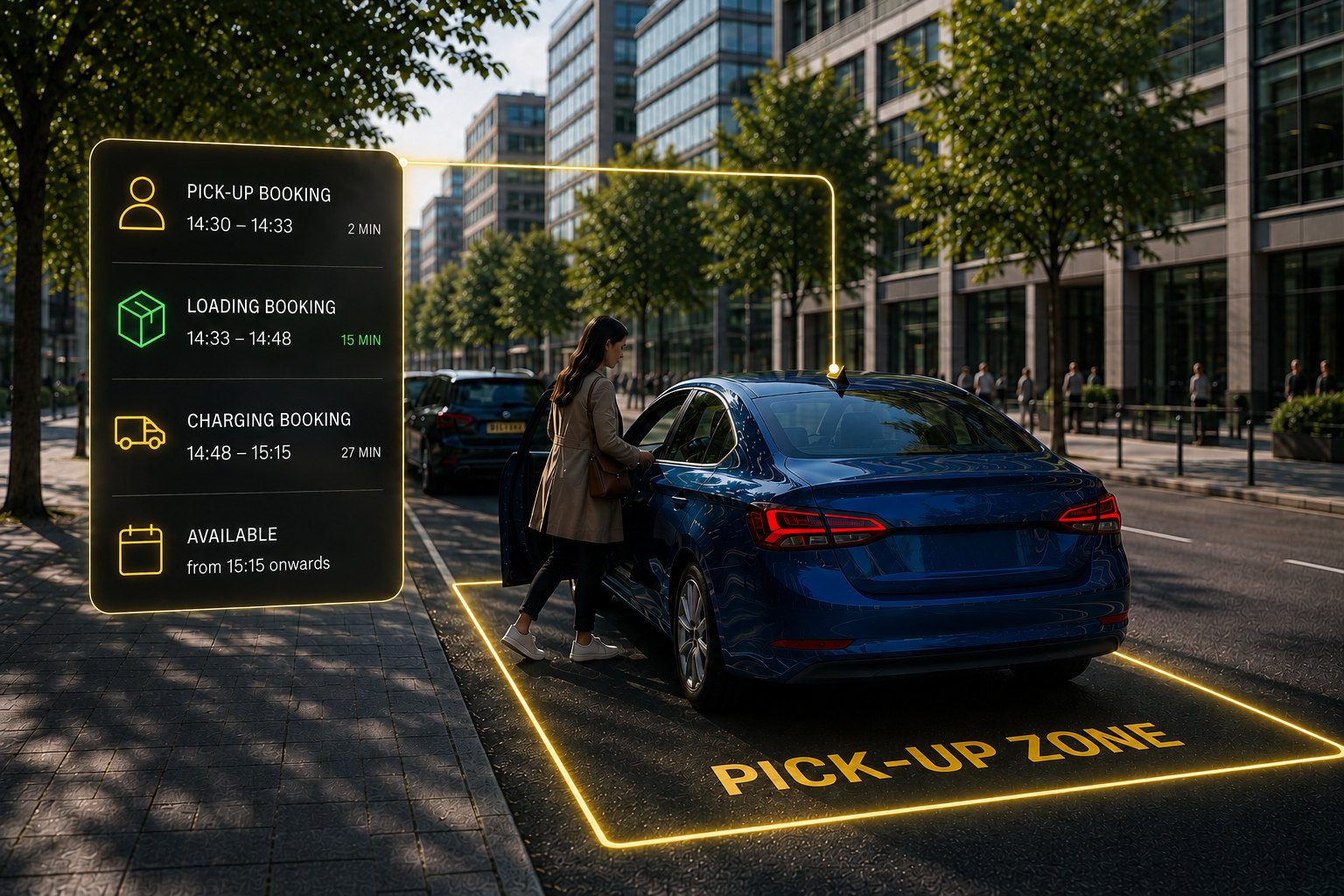
Where do autonomous vehicles stop? Not where they drive. Where they stop.
Because in dense urban environments, the future success or failure of autonomous mobility will not be determined solely by the sophistication of the driving stack. It will be determined by whether cities can intelligently enable and manage access to the kerbside.
And today, most cities cannot.
The Kerbside Is Becoming the Most Valuable Real Estate in Cities
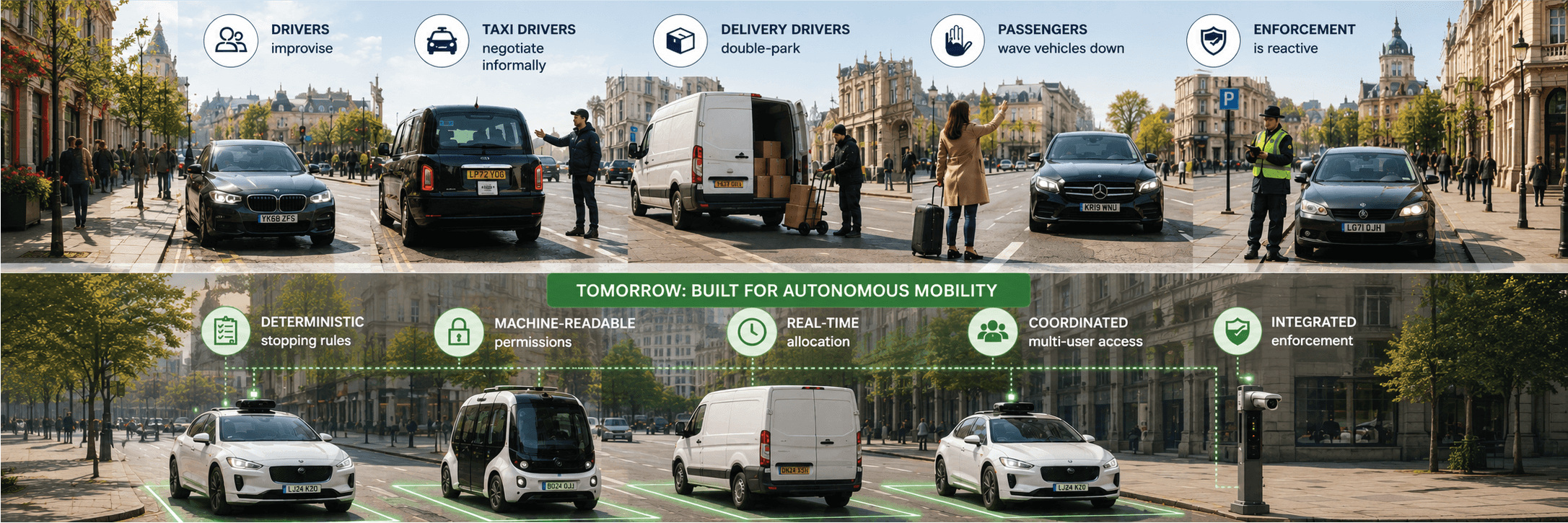
For over a century, kerbside management has evolved incrementally around human behaviour.
- Drivers improvise.
- Taxi drivers negotiate informally.
- Delivery drivers double-park
- Passengers wave vehicles down.
- Enforcement is reactive
Autonomous vehicles fundamentally change that equation.
Robotaxis, autonomous delivery fleets and AV logistics platforms cannot rely upon informal negotiation, eye contact, hand gestures or instinctive judgment. They require deterministic, machine-readable instructions governing where, when and how they may stop.
The industry itself is now openly acknowledging this challenge.
A number of recent postings from urban mobility specialists have highlighted that unmanaged pick-up and drop-off (PUDO) operations risk becoming the “Achilles heel” of the robotaxi industry. In cities already struggling with congestion, cycling safety, accessibility requirements and freight demand, millions of additional autonomous stopping events threaten to overwhelm existing kerbside management practices.
In effect, autonomous mobility is forcing cities to confront something they have historically lacked:
A digital operating system for the kerbside.
Autonomous Vehicles Need More Than Maps
Today’s autonomous vehicle stacks are extraordinarily sophisticated.
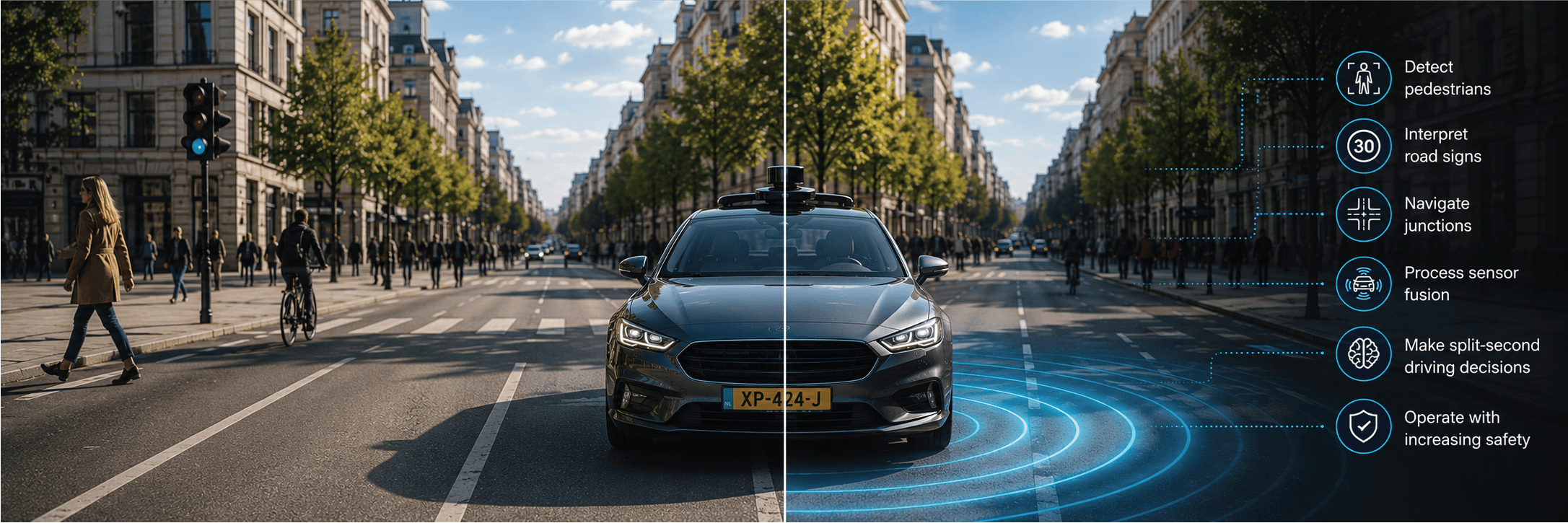
They can:
- detect pedestrians,
- interpret road signs,
- navigate junctions,
- process sensor fusion,
- make split-second driving decisions,
- and operate with increasing levels of safety.
But there is a crucial difference between navigating through a city, and interacting lawfully and efficiently with that city. An autonomous vehicle may know where a passenger is. But does it know:
- whether it is permitted to stop there?
- whether the kerb is reserved for freight?
- whether it conflicts with a cycle lane?
- whether disabled access takes priority?
- whether stopping is time-restricted?
- whether dynamic pricing applies?
- whether emergency access rules override commercial activity?
This is not a navigation problem. It is a permissions problem. And permissions require governance.
The Rise of the “Digital Permissions Wrapper”
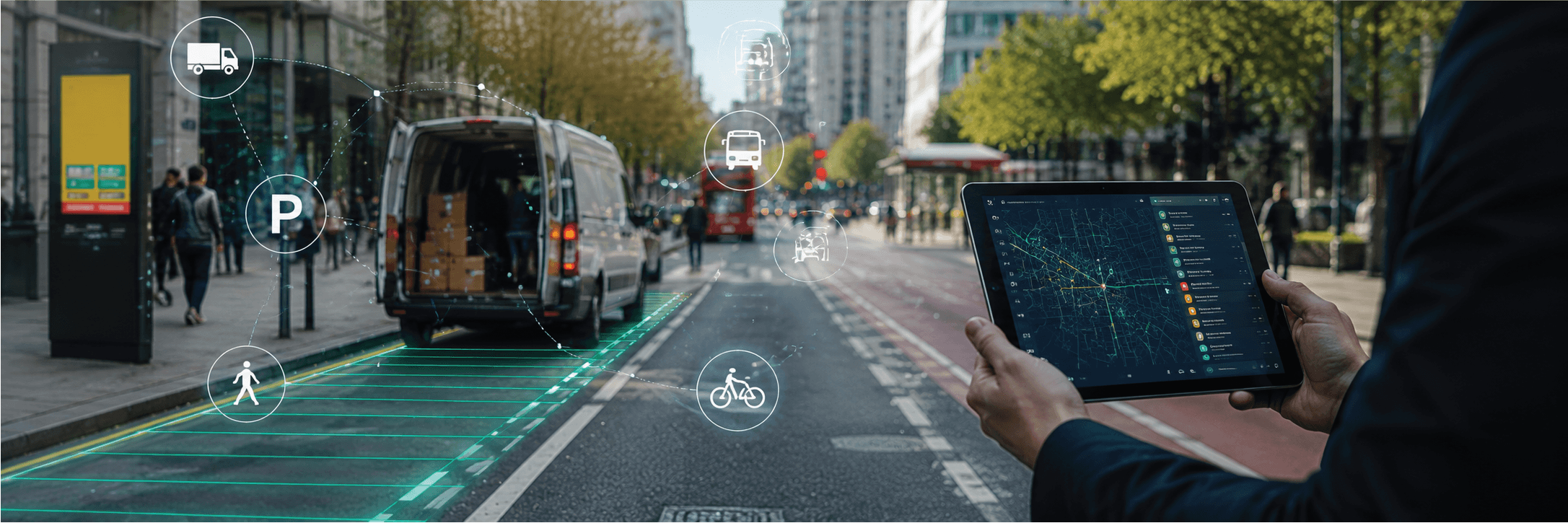
At Grid Smarter Cities, we have long argued that the future of urban mobility lies not simply in mapping roads — but in creating a dynamic digital permissions layer above them.
We describe this as a digital permissions wrapper.
A system capable of:
- dynamically allocating kerb access,
- managing competing demands,
- prioritising different users,
- enabling machine-readable stopping rights,
- integrating enforcement,
- and balancing operational efficiency with public policy outcomes.
In simple terms:
- demand,
- congestion,
- accessibility,
- freight movements,
- public transport needs,
- and autonomous vehicle operations.
Underpinning this is a rules hierarchy, a live, digitally adjustable order of priority that can be reviewed automatically as conditions change, whether that’s an emergency closure, poor air quality, or peak congestion, ensuring the right user has the right access at the right time.
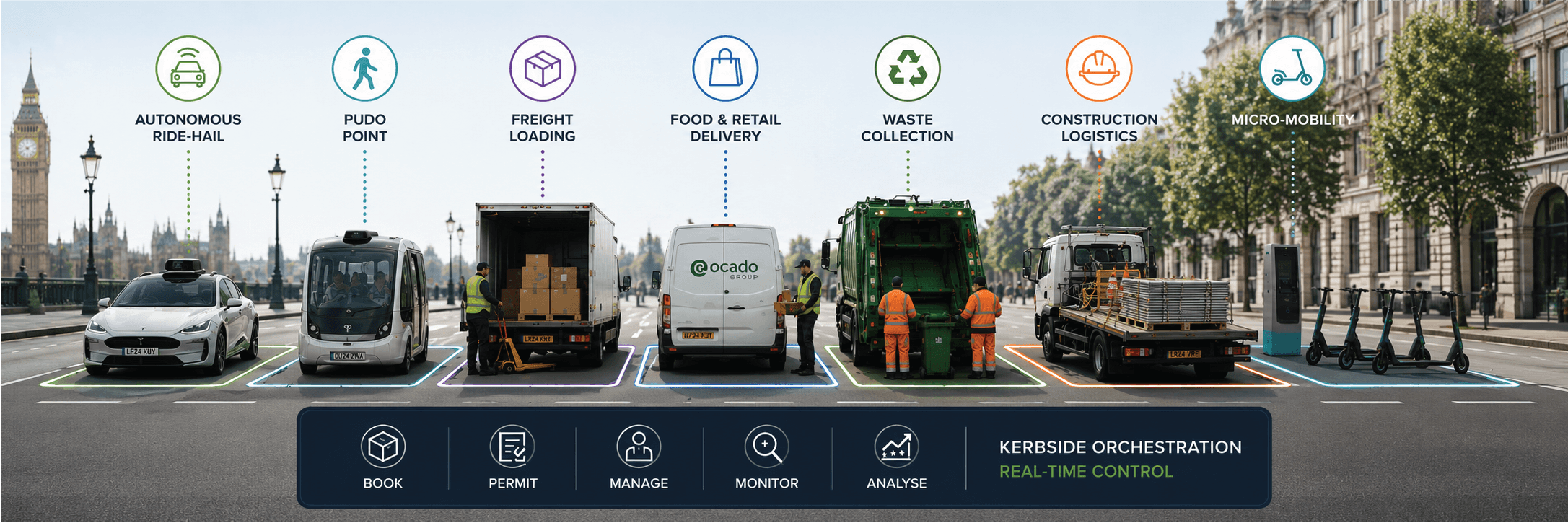
The Future City Cannot Operate on “First Come, First Served”
Historically, most kerbside space has been unmanaged or under-managed.
But autonomous mobility changes the economics entirely.
A single robotaxi fleet operating at scale could generate millions of annual PUDO events within one city. Autonomous freight and delivery fleets will place even greater pressure on urban stopping space.
Without orchestration:
- vehicles circle blocks,
- congestion increases,
- cycle lanes become obstructed,
- bus lanes become blocked,
- accessibility suffers,
- enforcement collapses,
- and public acceptance declines.
The answer cannot simply be “more parking” or “more priority lanes”. Cities instead require:
- dynamic allocation,
- temporal permissions,
- priority management,
- real-time reservation systems,
- and intelligent pricing mechanisms.
In other words: digitally orchestrated urban access — a transition from static infrastructure
to digitally orchestrated, dynamic equitable access.
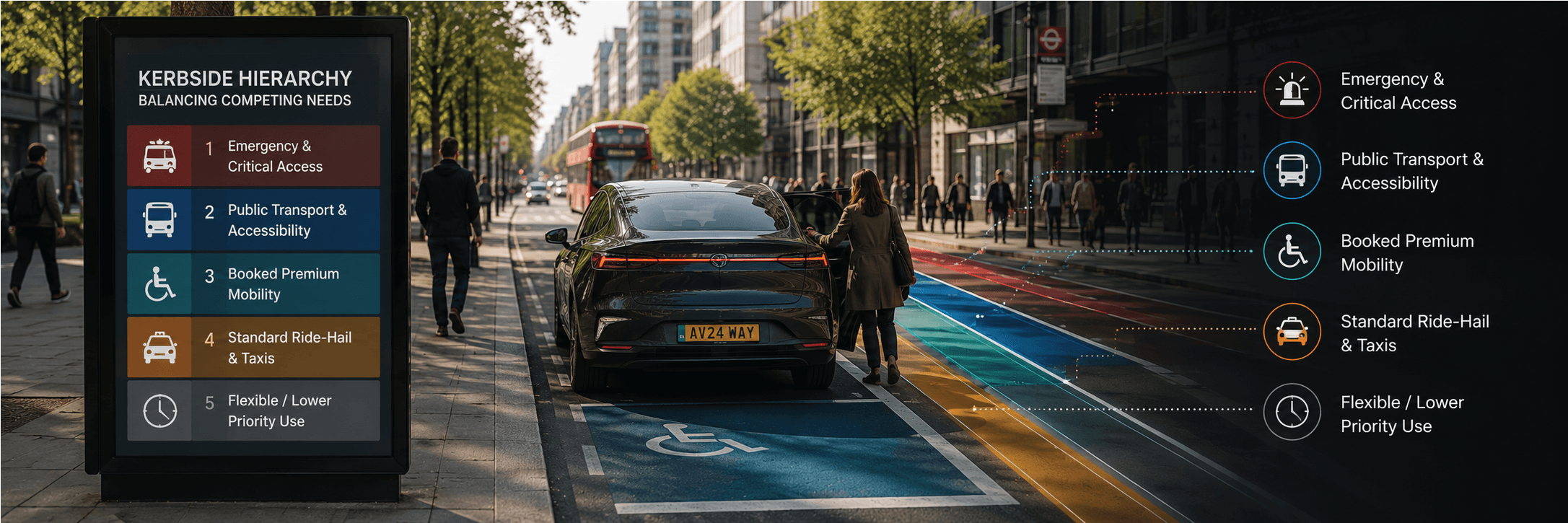
Kerbside Hierarchy: Balancing Competing Needs
One of the greatest risks in autonomous mobility is designing systems solely around the needs of AV operators. Cities do not exist purely for robotaxis.
The future kerbside must balance:
- emergency services,
- public transport,
- blue-badge users,
- freight and logistics,
- local residents,
- cyclists,
- pedestrians,
- hospitality,
- servicing,
- and autonomous fleets.
This requires a structured hierarchy of access rights. For example:
- Emergency and critical infrastructure access
- Public transport and accessibility
- Booked premium mobility
- Standard ride-hail and taxi operations
- Flexible or lower-priority usage
- Dynamic reactive reproritisation spatially and temporally
Such an approach allows cities to dynamically govern access according to:
- policy objectives,
- social equity,
- environmental priorities,
- and network conditions.
This is not anti-AV. It is pro-city.
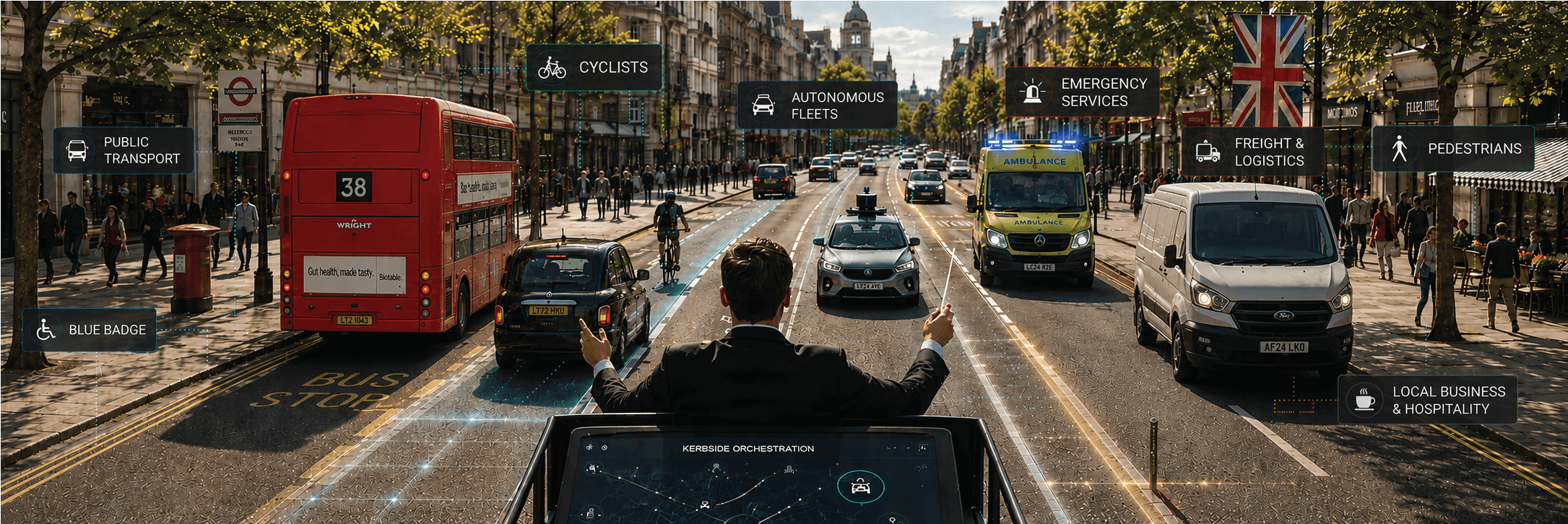
Why This Matters to Autonomous Vehicle Companies
For AV operators, kerbside orchestration is not a side issue. It is existential.
The economics of autonomous fleets rely upon:
- efficiency,
- predictability,
- utilisation,
- and rapid turnaround.
An AV that cannot reliably:
- pick up passengers,
- safely access a kerbside location,
- comply with local restrictions,
- or stop safely and legally,
quickly becomes commercially inefficient.
Autonomous fleets therefore require:
- trusted digital access systems,
- real-time kerb availability,
- interoperable permissions frameworks,
- and machine-readable city infrastructure.
This creates a new strategic layer within the mobility ecosystem.
Not simply autonomy, or mapping, but urban permissions orchestration.
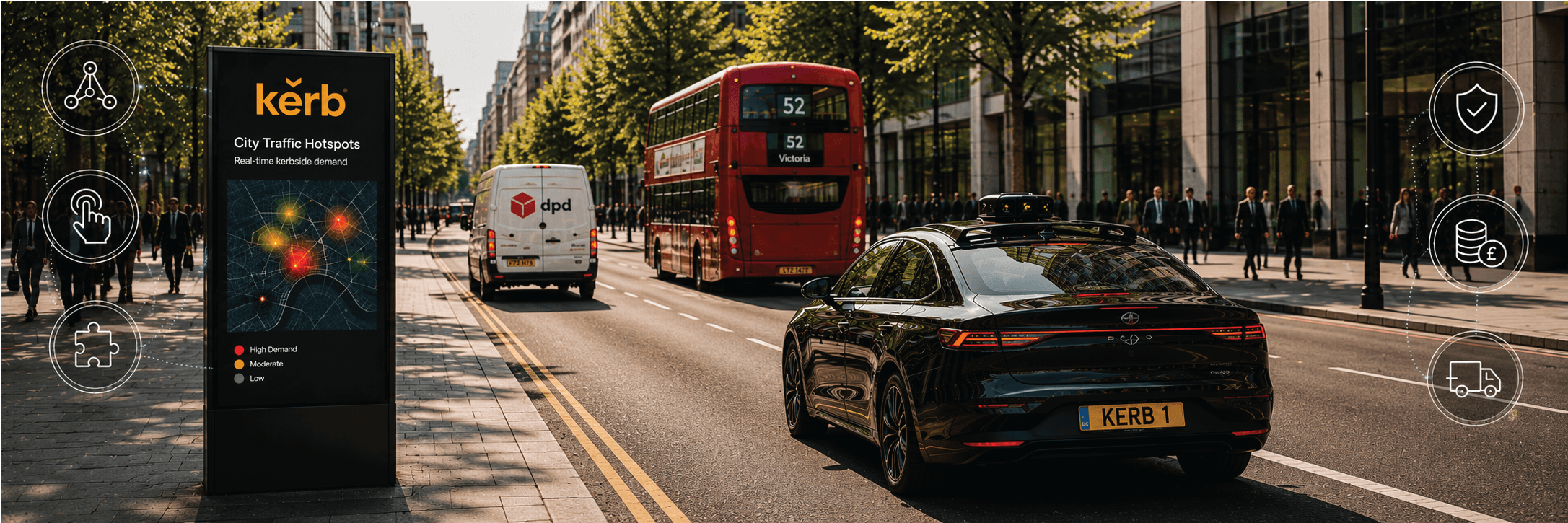
The Next Great Urban Platform
For decades, cities digitised:
- communications,
- payments,
- logistics,
- utilities,
- and commerce.
Now, they must digitise access. The kerbside is rapidly becoming:
- connected,
- interactive,
- interoperable,
- monetisable,
- and policy-driven.
The cities that succeed in autonomous mobility deployment will not necessarily be those with the largest AV fleets.
They will be those capable of intelligently orchestrating:
- who stops,
- where,
- when,
- why,
- and at what societal cost or value.
That requires more than vehicles.
It requires digital governance infrastructure.
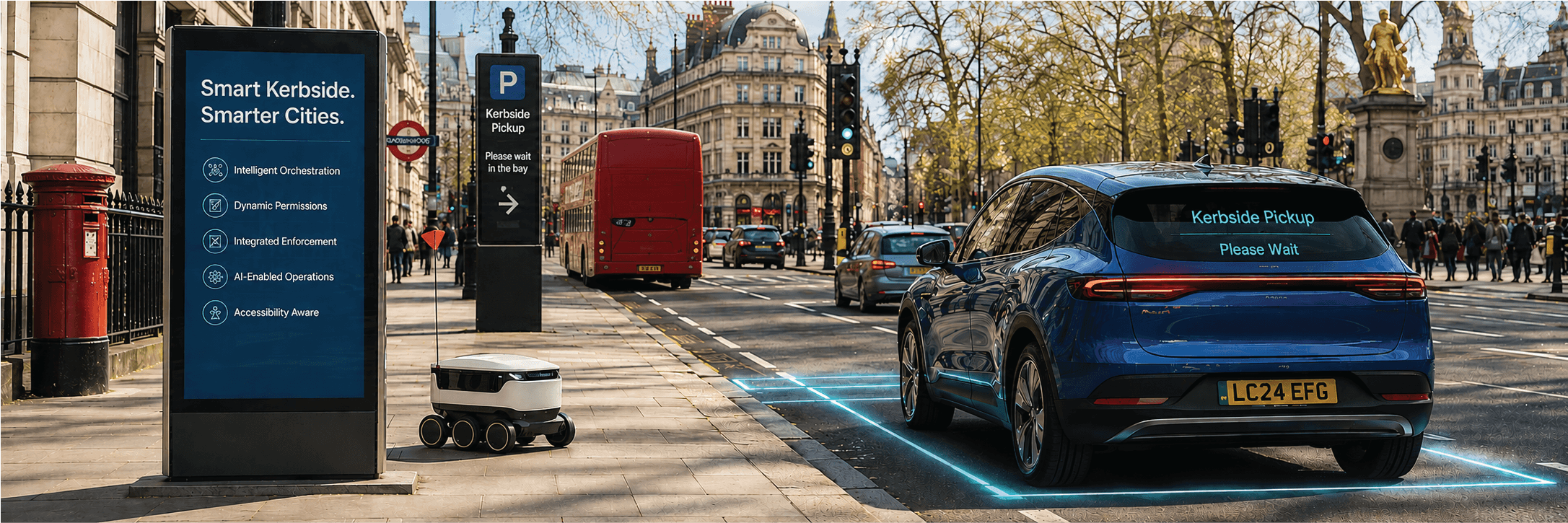
Building the Connected Kerbside Future
At Grid Smarter Cities, we believe the future city requires:
- intelligent kerbside orchestration,
- dynamic permissions,
- integrated enforcement,
- accessibility-aware allocation,
- and AI-enabled operational management.
The autonomous vehicle revolution is not solely about removing drivers. It is about rethinking how cities manage movement itself.
The roads of the future will not simply carry vehicles. They will operate as digitally governed mobility networks.
And at the heart of those networks sits the kerbside — the point where transport systems meet the real world.
The challenge for cities is no longer whether autonomous vehicles are coming.
They are.
The challenge is whether urban infrastructure is ready for them.
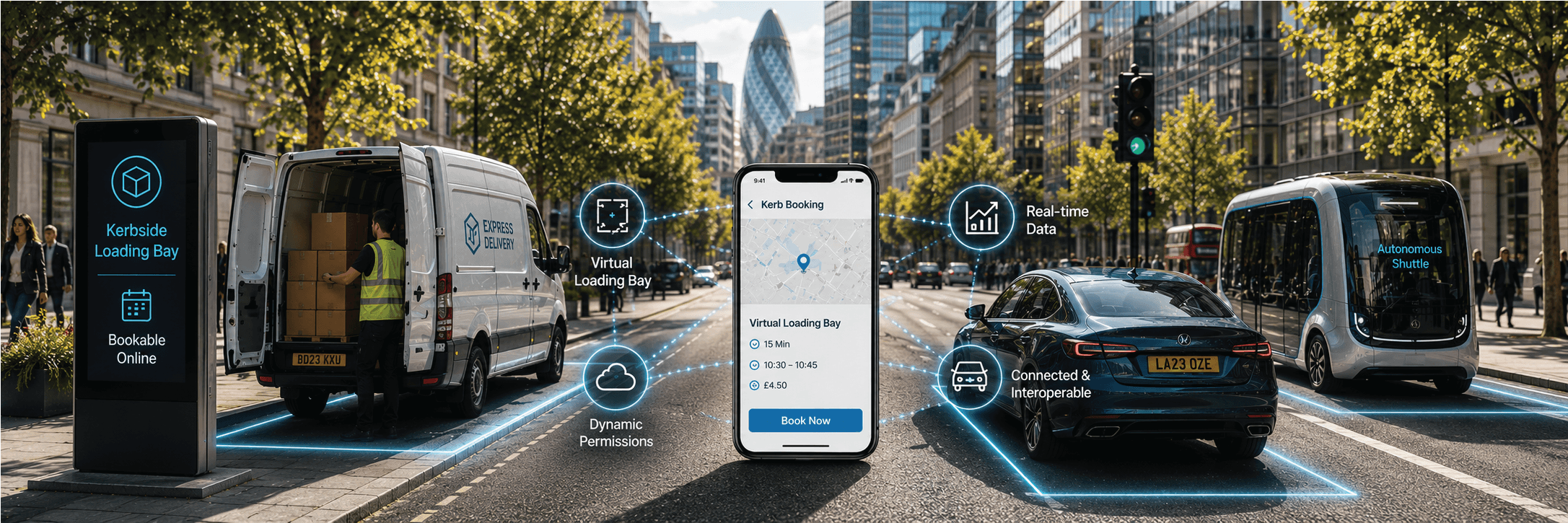
Grid Smarter Cities: Building the Infrastructure for Tomorrow’s Kerbside Network
Grid Smarter Cities is not simply discussing the future of kerbside management — it is actively building the operational and intellectual property framework that enables it. Through live deployments using its Kerb Platform, patented Virtual Loading Bay technology, dynamic permissions management, and sector-specific freight solutions, Grid has demonstrated that kerbside space can become a connected, bookable and interoperable transport network.
As cities prepare for increasing delivery demand, real-time logistics coordination, autonomous vehicle operations and dynamic pick-up/drop-off requirements, the importance of managing the kerb as critical digital infrastructure will only increase.
The future of urban mobility will not be defined solely by vehicles or mapping platforms — it will be defined by who controls and orchestrates access to the kerbside network itself.
That is where Grid is already leading the way.
Grid Smarter Cities: Building the Infrastructure for Tomorrow’s Kerbside Network
Whether you’re a city authority, AV operator, logistics platform or infrastructure investor, the kerbside challenge is going to land on your desk. Grid is working at the intersection of all of these worlds. If you’d like to compare notes or explore what a digital permissions layer looks like for your network, get in touch.
© 2026 Grid Smarter Cities Ltd. All rights reserved.
About Grid Smarter Cities:
We specialise in building sustainable digital products that enable the smarter management of kerbside and freight logistics. Our knowledge of the ecosystem at the kerbside enables us to work with clients such as local authorities and operators to solve their challenges and with a tech solution at the kerbside.